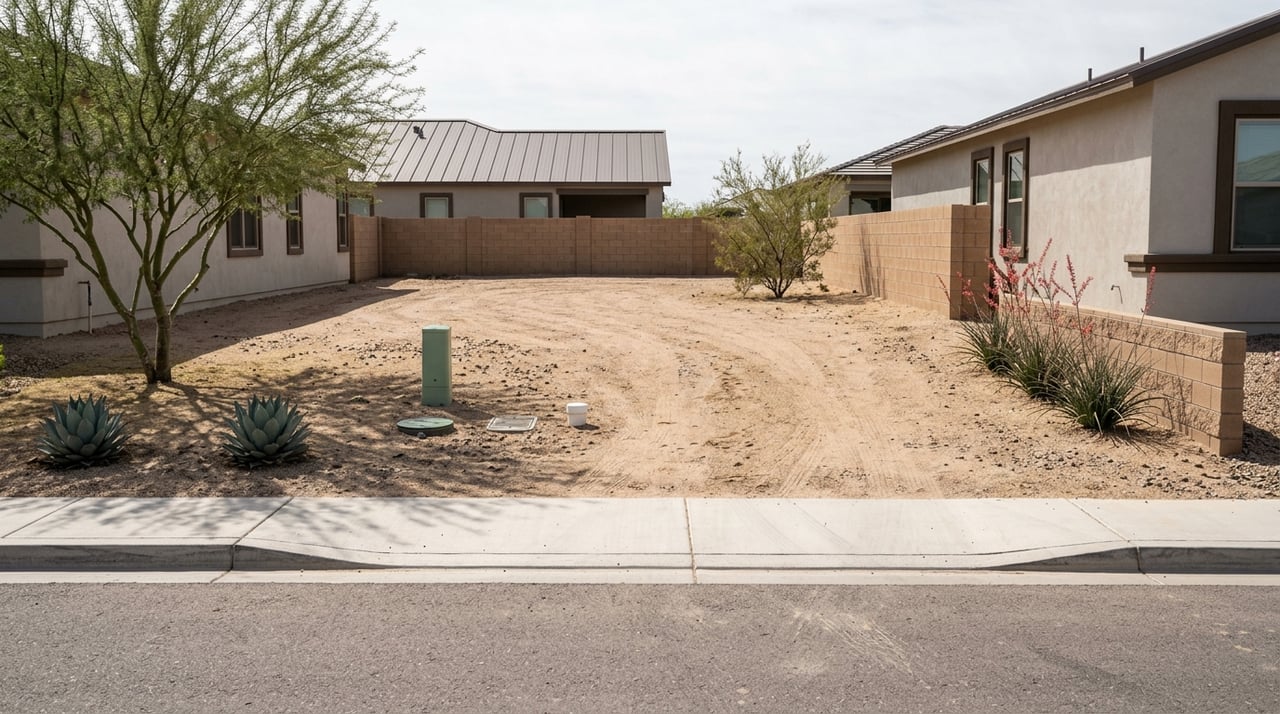
Buying land sounds simple until you realize a vacant lot can come with more questions than answers. If you are thinking about investing in buildable lots and land in Arizona City, you need more than a price per acre and a parcel map. You need to know what can be built, how utilities work, whether access is documented, and what county rules may affect your timeline and budget. Let’s dive in.
Why Arizona City land takes extra homework
Arizona City is an unincorporated community, which means Pinal County handles key land-use functions such as zoning, subdivision review, site plans, minor land divisions, addressing, floodplain review, and building safety. The Arizona City Sanitary District, or ACSD, is a separate entity that provides sewer service only. ACSD also states that Arizona City has no city government officials.
That matters because a land purchase here is not just about the listing itself. In practice, you are often evaluating a county process, a sewer district process, and utility coordination at the same time. Before you make an offer, it helps to ask a few basic questions: What is the zoning, is legal access documented, is sewer available, is the parcel in a floodplain, and is there a realistic path to water, power, and an address?
Start with zoning and legal access
Zoning is one of the first things to verify because it controls permitted uses, setbacks, and density. Pinal County says zoning depends on the parcel’s location and should be confirmed through the county zoning GIS map using the address or parcel number. If you assume a parcel can be used a certain way without confirming zoning first, you could be building your numbers on the wrong foundation.
Pinal County also reviews zoning requests, but county staff cannot predict whether a rezone will be approved. Only the Board of Supervisors can approve or deny that request. For investors, that means a future rezone may be possible, but it should not be treated as guaranteed.
Access deserves just as much attention as zoning. Pinal County says legal access questions should be taken to a title company. If the parcel depends on a private road, an unclear easement, or hoped-for future road improvements, your hold time and exit risk may increase.
When lot splits can affect your strategy
If your plan includes dividing land, timing matters. In unincorporated Pinal County, the Minor Land Division process covers five or fewer lots, parcels, or fractional interests and lots that are 10 acres or smaller. The county notes that property splits are governed by zoning, acreage, and prior divisions.
That means you should not assume a parcel can be split just because it looks large enough on a map. Recorded history and current zoning both matter. A parcel’s past divisions can directly affect what is still allowed.
Utilities can make or break the deal
For many Arizona City lots, utility questions are where the real investment story begins. A parcel that looks affordable at first glance may become much less attractive if sewer, water, power, or permit steps are more complex than expected. This is why raw land due diligence often goes deeper than home-buying due diligence.
Sewer in Arizona City
The Arizona City Sanitary District is a major piece of the puzzle. ACSD says it governs more than 60 miles of main sewer lines in Arizona City and has wastewater treatment capacity of about 1.5 million gallons per day. It also charges an annual availability fee of $48 on vacant parcels in the district that are adjacent to a sewer line but not connected to the system.
For new construction, ACSD requires a Sewer Permit. According to ACSD, that permit includes a hookup fee and a capacity fee. ACSD also says it needs a copy of the Pinal County building permit and an approved site plan or floor plan before issuing the sewer service connection permit, and it performs line locates and inspections before backfill.
For you as a buyer, the takeaway is simple: sewer adjacency is helpful, but it is not the same as being fully permit-ready. You still need to understand the district’s fees, timing, and connection requirements.
Water service and wells
Water is a separate step. Pinal County says that if a vacant parcel has never been serviced, the buyer must contact the appropriate utility provider because the county does not verify utility service areas or service availability. So even if a listing suggests water is nearby, you will want direct confirmation from the provider.
If public water is not available, a well may be part of the plan. The Arizona Department of Water Resources says a Notice of Intent to Drill must be filed before drilling, deepening, or modifying a well, and a licensed well-drilling contractor must perform the work. ADWR also notes that exempt domestic wells are generally limited to 35 gallons per minute or less.
Power and addressing
Power and addressing can be more limited than buyers expect. Pinal County says it will not permit power to a vacant parcel without a primary use such as a single-family residence or mobile home, although electricity can be obtained for a well through the appropriate permit. The county also says it will not issue an address to a vacant parcel without a primary use, though an address can be requested for a well.
That can affect your schedule if your strategy depends on early utility setup before building begins. In other words, utility planning in Arizona City often has to match your actual development path, not just your long-term goals.
Floodplain and site conditions matter
A low-cost lot can become much more expensive if floodplain issues show up late in the process. Pinal County says development in a floodplain requires a Floodplain Use Permit and may also require a scaled site plan, drainage plan, and elevation certificate. This is one of the most important items to verify before you close.
If the parcel is in a floodplain, extra engineering steps may be needed for a conventional home, manufactured home, or grading plan. Pinal County notes that a registered engineer or surveyor may be required for foundation and elevation documentation. Manufactured-home installations in floodplains may also involve state-level approval steps.
For investors, this can affect build cost, time to permit, and resale appeal. A lot with fewer floodplain complications is often easier to market because the path to construction is clearer.
A practical due diligence checklist
Before you write an offer on land in Arizona City, it helps to build your checklist around county and district requirements.
Records to review first
- Order a title commitment.
- Confirm legal access with the title company.
- Review the recorded plat, legal description, easements, and lot-split history.
- Ask for sewer and water as-builts from the utility provider when available.
These steps can help you avoid assumptions about access, utility placement, and development rights. Pinal County specifically directs owners to a title company for legal access questions and notes that it does not keep sewer and water as-builts.
Site and permit questions to answer
- What is the current zoning?
- What uses are allowed under that zoning?
- Is the parcel adjacent to sewer?
- Are any availability or connection fees owed?
- Who is the water provider?
- Is the parcel on a public water path or a well path?
- Is the parcel in a floodplain, erosion zone, or drainage corridor?
- Will driveway, grading, or utility work require a right-of-way permit?
If you are changing the lot layout, also confirm whether a minor land division, subdivision review, or zoning action is required before closing. That question alone can save you from buying a parcel that does not fit your intended strategy.
Smart investment approaches for Arizona City lots
One practical strategy is to focus on parcels that are already close to permit-ready. Lots with confirmed zoning, documented access, sewer adjacency, and fewer floodplain issues tend to have fewer unknowns. That can make them easier to resell as build sites or move into construction more quickly.
Another approach is to buy raw land at a discount and reduce uncertainty over time. That may mean working through entitlement steps, coordinating utilities, or reconfiguring lots where county rules allow it. The tradeoff is that each layer of uncertainty can add carrying cost and time.
If your plan is to hold land instead of building right away, the basics still drive value. Clean title, documented access, realistic utility costs, and a clear permit path usually matter more than a low purchase price alone. In Arizona City, that is especially important because sewer is district-based while water, power, and road issues can vary from parcel to parcel.
Build your team early
Land purchases often go more smoothly when you involve the right professionals early in the process. Depending on the parcel, that may include:
- A title company for legal access, easements, and recorded documents
- A surveyor or civil engineer for site plans, grading, drainage, and floodplain work
- A well driller if a private well is part of the plan
- A septic contractor if sewer is not available or not economical
- Pinal County departments and ACSD for zoning, permits, floodplain review, and sewer connection steps
This kind of planning can help you move from uncertainty to a more informed decision. It also helps you compare lots based on true buildability, not just list price.
If you are weighing land opportunities in Arizona City and want practical guidance on how a parcel may fit your goals, Jan Larison is here to help you sort through the details and take the next step with confidence.
FAQs
What should you verify before buying land in Arizona City?
- You should verify zoning, legal access, sewer availability, water options, floodplain status, and whether the parcel has a realistic path to permits, power, and addressing.
How does sewer service work for Arizona City lots?
- Sewer service is handled by the Arizona City Sanitary District, which may charge an annual availability fee on certain vacant parcels and requires a Sewer Permit for new construction connections.
Can you split a parcel in Arizona City?
- Some parcels may qualify for a Minor Land Division in unincorporated Pinal County, but eligibility depends on zoning, acreage, and prior divisions.
Do vacant lots in Arizona City automatically get power and an address?
- No. Pinal County says it will not permit power or issue an address to a vacant parcel without a primary use, though there can be an exception for a well.
Why does floodplain status matter for Arizona City land buyers?
- Floodplain status matters because development in a floodplain requires additional review and permits, and it may also require engineering documents such as drainage plans or elevation certificates.