Does the water that keeps five acres green in Canyon County actually belong to whoever's name ends up on the deed? Most buyers assume yes, the same way they assume the furnace and the fence come with the house. Idaho's water law does not work that way, and the gap between what buyers assume and what actually transfers is where a surprising number of Caldwell closings run into trouble.
Idaho follows the prior appropriation doctrine, summarized locally as first in time, first in right. The water itself belongs to the state, not to the landowner. What a property owner actually holds is a water right, a permit authorizing a specific diversion, from a specific source, for a specific purpose, with a priority date that determines who gets water first when supply runs short. That right is a distinct piece of property, separate from the land it serves, and Idaho law does not transfer it automatically just because a deed changes hands. It has to be recorded on its own, and title insurance typically does not cover it at all, which means the burden of verification lands squarely on the buyer rather than the title company.
That single fact, that the water and the dirt are two different transactions, is the thing most out-of-state buyers and even some first-time Idaho buyers do not find out until they are already under contract on acreage west of Boise.
Why the Answer Depends on Which Entity You Call
Canyon County's irrigation infrastructure is not run by one organization. It is split between at least three, and which one actually controls the water on a given parcel depends on how that water is delivered.
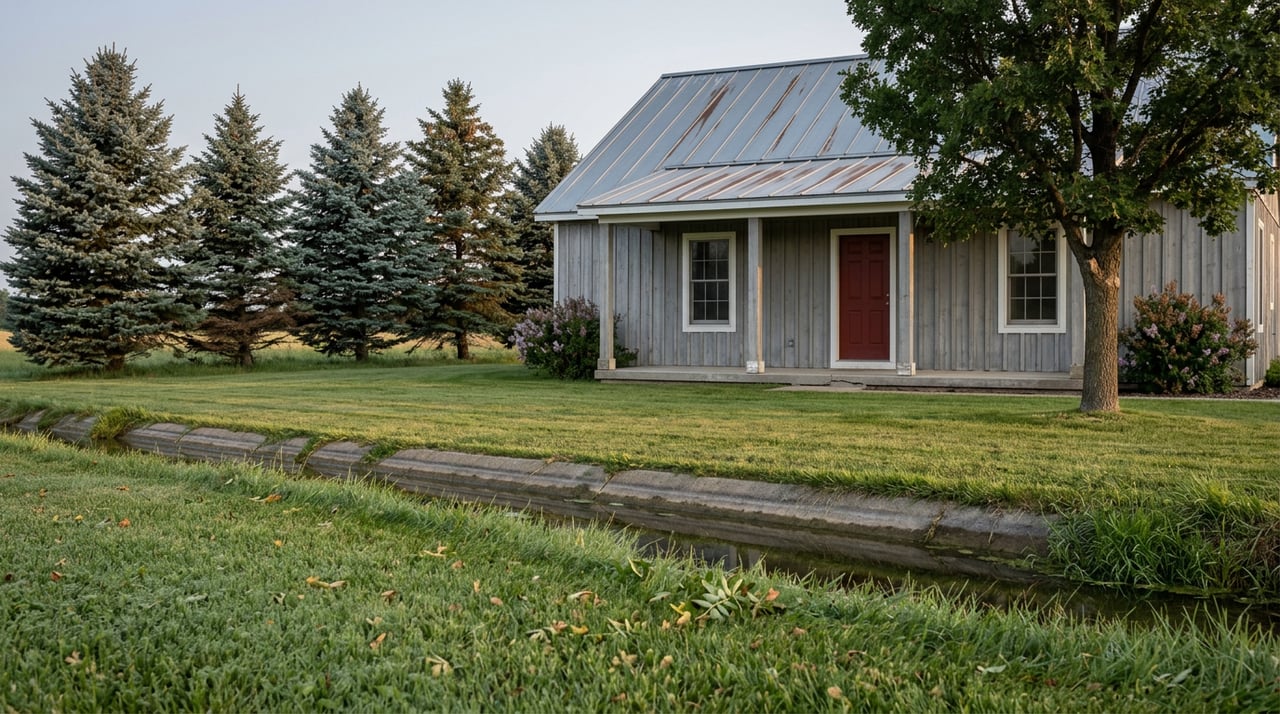
Pioneer Irrigation District, established in 1901, delivers irrigation water to more than 34,000 acres across Canyon County and western Ada County. The district owns and operates the Phyllis Canal, the Lowline Canal, the Highline Canal, and a network of smaller ditches and drains that cross rural and semi-rural lots throughout the area. If a parcel is on gravity-flow ditch delivery, meaning water moves through open ditches rather than pressurized pipe, Pioneer is very likely the entity that matters.
But a meaningful share of newer subdivisions run pressurized sprinkler systems instead, and Pioneer's own FAQ is direct about the wrinkle this creates: many pressurized subdivisions sit inside Pioneer's district boundaries on paper, but the day-to-day water, including maintenance, billing, and watering schedules, is actually handled by the city that annexed the subdivision. Pioneer may still be the one delivering raw water to the pump station, while the Caldwell Municipal Irrigation District or its counterpart in Nampa runs everything from that pump station into individual yards. A buyer who calls Pioneer to confirm water rights on a pressurized lot may get an accurate but incomplete answer, because the entity that actually bills and maintains that system is a different office entirely.
Nampa adds its own layer. The Nampa & Meridian Irrigation District explains that community or user ditches, the smaller private ditches that resulted from old farm units being split into multiple ownerships, are the responsibility of the landowners using them, not the district. Meanwhile the City of Nampa confirms that most of the city's irrigation water arrives through the canal system from Lucky Peak, managed jointly by Pioneer and NMID, while the pressurized pump stations and mainlines inside many subdivisions belong to the city's own Waterworks Division.
None of this is explained on a single page anywhere, which is exactly the problem. Here is how the three most common contact points break down for a Canyon County buyer trying to figure out who to call first.
| Entity | What It Actually Controls | Best Contact For |
|---|---|---|
| Pioneer Irrigation District | Raw water delivery via canals and ditches across Canyon County and western Ada County; gravity-flow parcels | Confirming a water right exists and whether assessments are current on ditch-delivered acreage |
| Caldwell Municipal Irrigation District | Pump stations, mainlines, and billing inside pressurized subdivisions annexed by the city | Pressurized-system questions on lots within Caldwell city limits |
| Nampa & Meridian Irrigation District | Canals and laterals serving Nampa-area parcels, and coordination with city pump stations | Water master contact and delivery schedules for Nampa-area ditches |
A buyer working from one office's answer alone can walk away thinking a property has current, confirmed water rights when the entity that actually issues the bill was never contacted.
What an Unpaid Assessment Actually Does to a Property
Assuming the water right does exist and the correct entity has confirmed it, there is a second question that matters just as much: is the account current.
Pioneer's assessment cycle runs on a fixed schedule, with the first half due December 20 and the second half due June 20 of the following year. As of this writing, the district's own notice states that all unpaid 2025 assessments became delinquent as of June 20, 2026, and are now accruing penalties and interest. That is not a hypothetical. It is the live status of any Canyon County parcel where last year's irrigation bill went unpaid, and a delinquent balance does not disappear when the property changes hands.
If assessments stay unpaid, the district files a tax lien. If that lien remains unpaid for three years after it is recorded at the county recorder's office, Idaho law requires the district's treasurer to issue the district a tax deed to the property, effectively transferring title through the delinquency process rather than a normal sale. A buyer who skips confirming assessment status is not just risking a surprise bill. They are inheriting whatever position the property already occupies in that three-year clock.
The Sequence That Actually Protects a Buyer
The fix is not complicated, but it has to happen before an offer is written, not during the inspection period when there is less room to renegotiate.
- Ask which entity actually delivers water to this specific parcel, gravity ditch or pressurized subdivision, and confirm with that entity directly rather than assuming the district named in public records is the only one involved.
- Request the water right number for the parcel and check its status, priority date, and permitted use through the Idaho Department of Water Resources, which maintains a searchable statewide database by name, location, or right number.
- Ask the correct district in writing whether assessments are paid through the current cycle, since a verbal answer from a seller is not the same as confirmation from the office that holds the lien.
- Confirm the purchase agreement and deed specifically reference the water right by number. A right that is not named in the deed does not transfer just because everyone assumes it should.
- If the parcel sits outside any irrigation district and annexation is being considered, budget for Pioneer's $300 processing fee and the 90-day waiting period the district requires before a new account can be created.
- If building near a canal or lateral is part of the plan, budget separately for encroachment permitting, which currently runs $3,500 under Pioneer's fee schedule, split between engineering, legal, and administrative review.
For smaller in-town lots relying on a domestic well rather than a shared ditch, Idaho's domestic use exemption allows a household to draw up to 13,000 gallons per day, including enough to cover roughly half an acre of lawn or garden, without a separate water right permit. That exemption is exactly why irrigation shares matter far more on acreage and larger rural lots than they do on a standard quarter-acre in-town parcel, and why the due diligence sequence above is really an acreage-buyer conversation more than a general Caldwell conversation.
FAQ
Does every property in Caldwell have irrigation water rights? No. Water rights and irrigation shares are common on acreage and rural-flavored lots across Canyon County, but a smaller in-town lot on municipal water and sewer may have no irrigation right attached at all, and does not need one to function normally.
What happens if the previous owner never paid the irrigation assessment? The unpaid balance becomes a lien against the property itself, not just a debt of the previous owner. If it stays unpaid for three years after the lien is recorded, the irrigation district can pursue a tax deed. Confirming current assessment status before closing is the only way to know whether that clock is already running.
If Pioneer confirms my water right is valid, does that also mean my pressurized sprinkler system will work? Not necessarily. Pioneer may deliver raw water to the pump station serving a subdivision while the city that annexed the subdivision owns and maintains everything from that pump station into individual yards. Confirming the water right and confirming the pressurized delivery system are two separate calls.
Water rights are exactly the kind of detail that separates a smooth acreage closing from one that stalls in the final weeks. Larison Real Estate works this ground every day, from Caldwell subdivisions to Owyhee County acreage, and knows which office to call before an offer goes in rather than after. If you're evaluating a rural or semi-rural property in Canyon County, schedule a free consultation and let's confirm what's actually included before you write the offer.