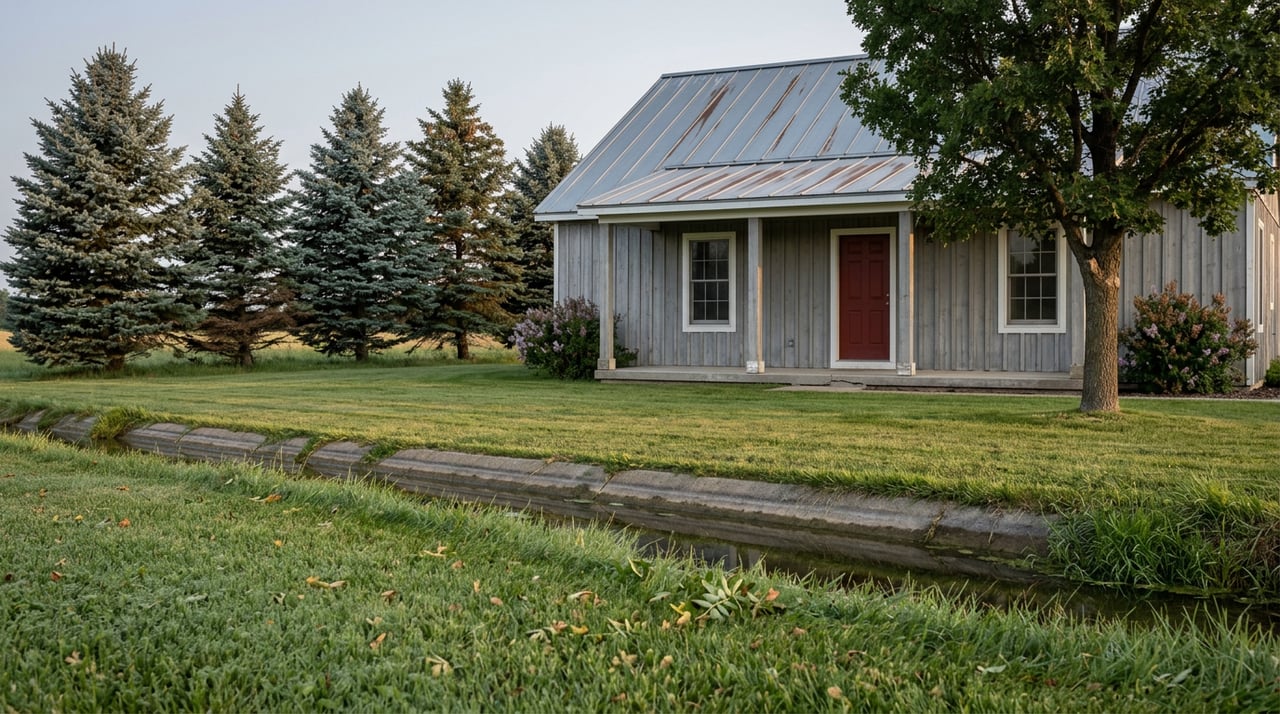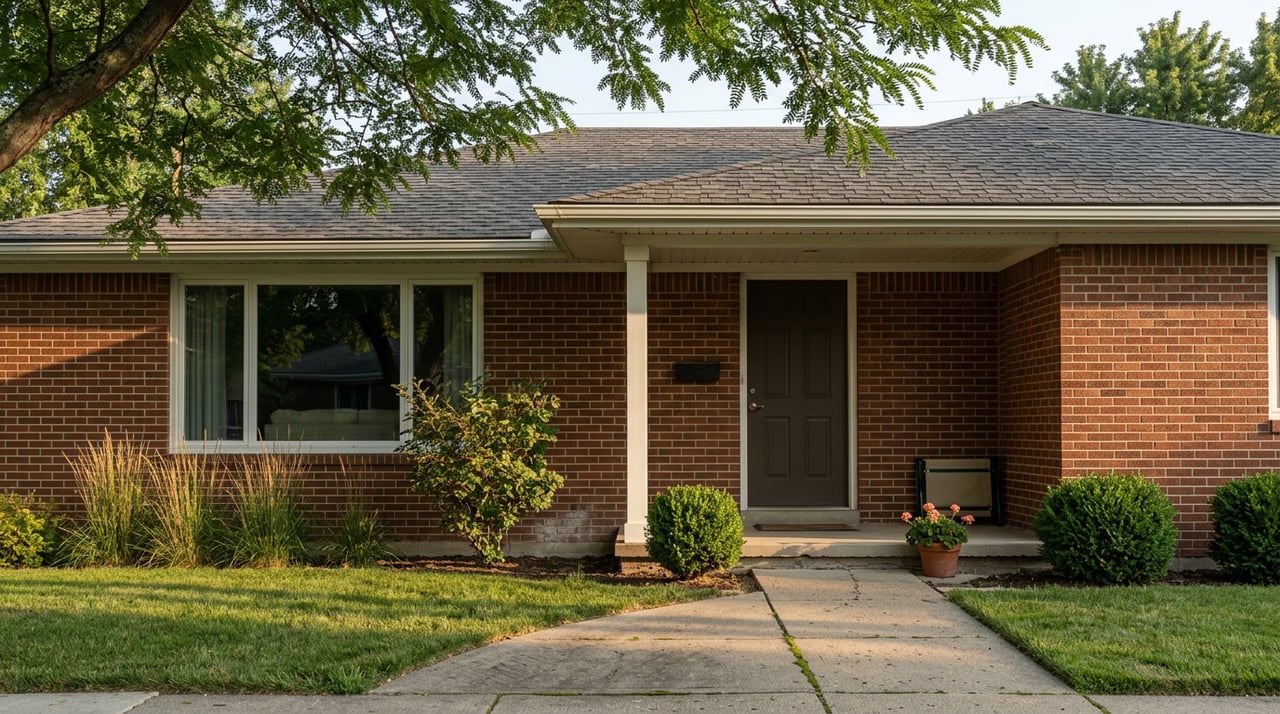
In February 2022, a non-contributing home on McKinley Street in Boise's East End was cut into pieces and hauled off its lot. No building permit. No Certificate of Appropriateness. The East End Neighborhood Association noticed and alerted the city within days, and a stop-work order followed. The project sat frozen for months while the owner sought retroactive approval, and the house itself ended up relocated to Owyhee County. The owner eventually had to appear before Boise's Historic Preservation Commission just to get permission to build something new on the now-empty lot.
That story usually gets told as a cautionary tale about demolition. The more useful lesson for anyone shopping in Boise's older neighborhoods is smaller and easier to miss: the rule that stopped that project also covers things that feel completely routine. A fence. A tree. A window. A paint color. Most buyers assume the historic district label only matters if they're planning an addition or a full remodel. It doesn't work that way, and the penalty for getting it wrong has gotten considerably sharper in the last few years.
What Actually Triggers a Certificate of Appropriateness
Idaho state law is specific on this point. Under Idaho Code 67-4608, once a historic district is designated, no exterior feature of a building, including walls, fences, steps, or attached fixtures, can be altered, moved, or demolished until a Certificate of Appropriateness has been approved. The statute goes further than most people expect: a Certificate of Appropriateness is required whether or not a building permit is otherwise required for the work.
Boise's own North End Neighborhood Association spells out what that means in practice for a homeowner. Changes that require a Certificate of Appropriateness include:
- Removal of trees
- Installation of a non-wood fence
- Window replacement
- Construction of an addition, porch, or deck
- Demolition of any part of a structure
None of that reads like a renovation project. It reads like a Saturday to-do list. That's the gap between what buyers assume the historic district restricts and what it actually restricts, and it's the gap that trips people up.
Two Speeds of Review, and Why the Difference Matters
Not every Certificate of Appropriateness moves at the same pace. The City of Boise splits review into two tracks.
| Review Type | Who Reviews It | Public Hearing? | Timeline |
|---|---|---|---|
| Administrative (Type 2) | Planning staff | No | 15 days for staff review, 10-day appeal period before a permit can be pulled |
| Hearing-level (Type 3) | Historic Preservation Commission | Yes | Scheduled around the Commission's public hearing calendar |
The administrative track is fast by city standards, but it still isn't instant. Fifteen days of staff review plus a mandatory ten-day appeal period means a straightforward window swap can carry a built-in month before a permit is even issued. Anything the Decision Matrix classifies as major, an addition, a significant facade change, most demolitions, moves to the hearing-level track instead, which means a public hearing before the Historic Preservation Commission and a calendar that depends on when that Commission meets next, not on how quickly a contractor can start.
The Real Currency Is Time, Not Money
Here's the number that tells you what this actually costs a buyer: local renovation estimates put the added timeline for a Certificate of Appropriateness at four to eight weeks for common exterior scope items like window enlargement, a new wall penetration, an exterior color change, an addition, or substantial siding work. That's not the cost of the work itself. That's pure calendar time added on top of whatever the contractor already quoted, before a permit can even be pulled.
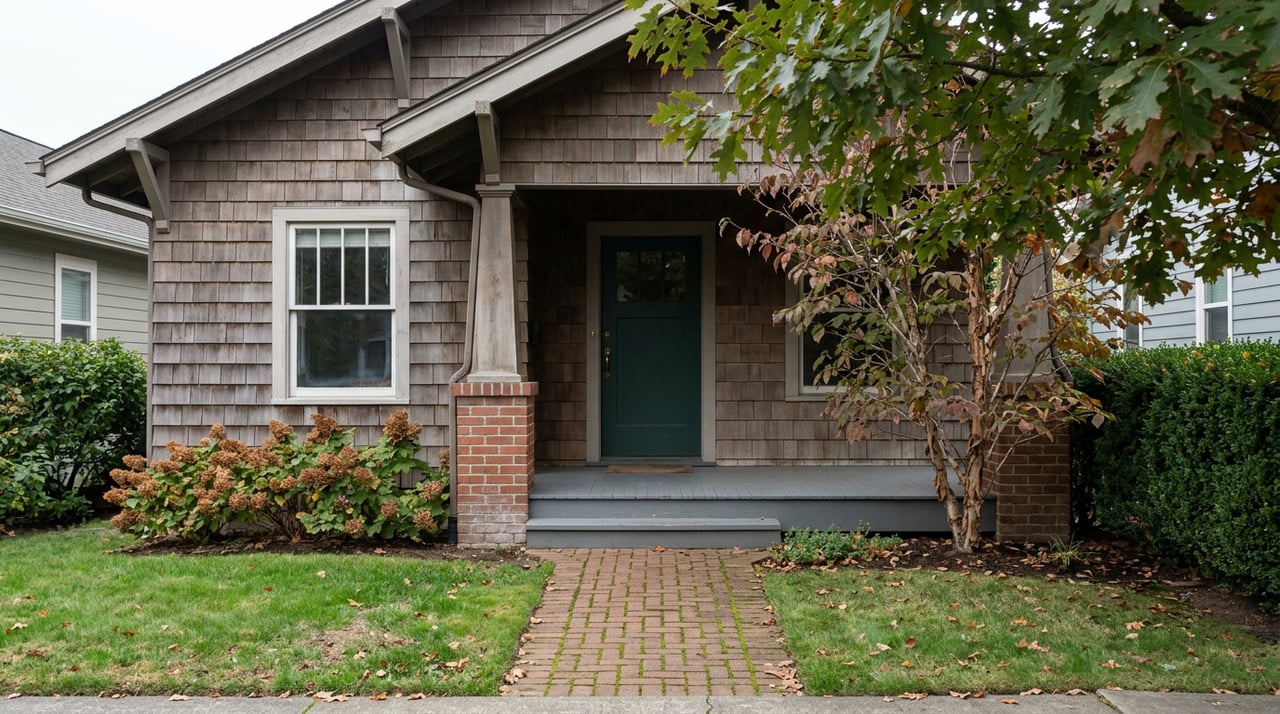
This lands harder in the North End than it would almost anywhere else in Boise, because of what's actually inside these walls. The district's housing stock is mostly early twentieth century, Craftsman bungalows built between 1905 and 1925 clustered around 13th Street, Tudor Revivals from 1925 to 1940 along Harrison Boulevard. Balloon framing, knob-and-tube wiring, lath-and-plaster walls, original galvanized supply lines and cast iron drain stacks are common discoveries once a contractor opens a wall for what looked like a simple repair. When that repair also touches an exterior feature, siding, a window opening, a porch, the interior discovery and the exterior review stack on top of each other. A buyer who plans a project around a contractor's quoted schedule alone, without adding the district's review window, is planning around half the actual timeline.
Enforcement Used to Be a Fine. Now It's a Freeze.
The consequences for skipping this process changed materially in recent years, and the story behind that change is worth knowing before you decide the risk is worth taking.
In 2021, a family renovating a North End property removed ten mature trees on a corner lot at 19th and Ada Streets without the permits the historic district requires. The removal sparked enough backlash that it reached Boise City Council, where members heard hours of testimony from preservation advocates and neighbors. Before that point, the only penalty on the books for this kind of violation was a $1,000 fine, one that city officials themselves acknowledged was difficult to enforce and not much of a deterrent. The Council responded by unanimously approving new authority for city staff: a six-month construction delay for violations like unauthorized tree removal or demolition without permits.
One preservation advocate summed up the shift plainly, noting there will be consequences for violations "whether they were intentional or not." That detail matters for buyers specifically. The rule doesn't ask whether you knew. It asks whether the work happened without approval, and if it did, a project that might have taken a season can now be frozen for half a year regardless of how much money or momentum is already behind it.
What This Means Before You Write an Offer
A few practical habits change the entire risk profile here.
First, confirm exactly which district a property sits in. Boise has ten local historic districts, not one, and North End, East End, and Hays Street each carry their own design guidelines describing what counts as historically appropriate for that specific area's architecture. The state law and the Certificate of Appropriateness process are the same everywhere, but what clears review in one district might not clear it in another.
Second, ask directly whether any exterior work has happened on the property without city approval. A violation attaches to the address, not to the person who caused it. The McKinley Street case shows how long that tail can be, months of delay before a retroactive approval was even possible.
Third, build the review window into your own renovation math before you close, not after. If a contractor quotes six weeks for a project that touches an exterior feature, plan for ten to fourteen instead.
Fourth, remember that a property just outside the historic boundary isn't automatically free of extra review either. The Near North End Character Overlay, for instance, is a separate zoning tool covering the transitional blocks between downtown and the historic district, with its own restrictions on demolition and adaptive reuse. Confirm which layer of review actually applies to a specific address rather than assuming a property is either fully inside or fully outside the rules.
A Few Questions Worth Settling Before You Close
Does changing my paint color really require city sign-off? Basic maintenance and repainting the same color generally don't trigger review. Changing the color is treated as an exterior alteration in the districts, so it's worth confirming before you buy the paint.
I found a home listed as non-contributing to the district. Does any of this still apply? Yes. The McKinley Street property was explicitly non-contributing, and the move still required a stop-work order and retroactive city approval. District boundaries govern the process, not a single building's historic status within it.
Are all ten historic districts governed by the same guidelines? They share the same state law and the same Certificate of Appropriateness framework, but each district has its own design guidelines tailored to its architecture. A fence style that clears review on a North End Craftsman bungalow may not clear review somewhere else in the city.
None of this makes an older Boise neighborhood a bad buy. It makes it a different kind of buy, one where the calendar matters as much as the comps. If you're looking at a North End or East End property and want to know what a specific address actually allows before you write an offer, Larison Real Estate can walk through it with you. Schedule a Free Consultation and we'll help you separate the charm from the paperwork before you're the one explaining a stop-work order to a neighbor.